
Fire safety systems are essential for protecting life and property, especially in commercial and industrial environments. Among them, the fire hydrant system is one of the most reliable solutions for controlling fire emergencies.
Understanding the components of a fire hydrant system is crucial because each part plays a vital role in ensuring proper water flow, pressure, and accessibility during a fire.
If you are planning a system for your building, choose the Precision Safety Controls Pvt. Ltd. for professional fire hydrant system installation and compliance with safety standards.
What Are the Components of a Fire Hydrant System?
A fire hydrant system consists of multiple interconnected components designed to deliver water efficiently during emergencies.
Main Components Include
- Fire Water Storage Tank
- Fire Pump Set (Main Pump, Diesel Pump, Jockey Pump)
- Hydrant Piping Network
- Hydrant Valves (Internal & External)
- Hose Box & Accessories
- Landing Valves
- Fire Brigade Connection (FBC)
- Valves & Fittings
To understand how these systems are categorized, you can also read about types of fire hydrant system.
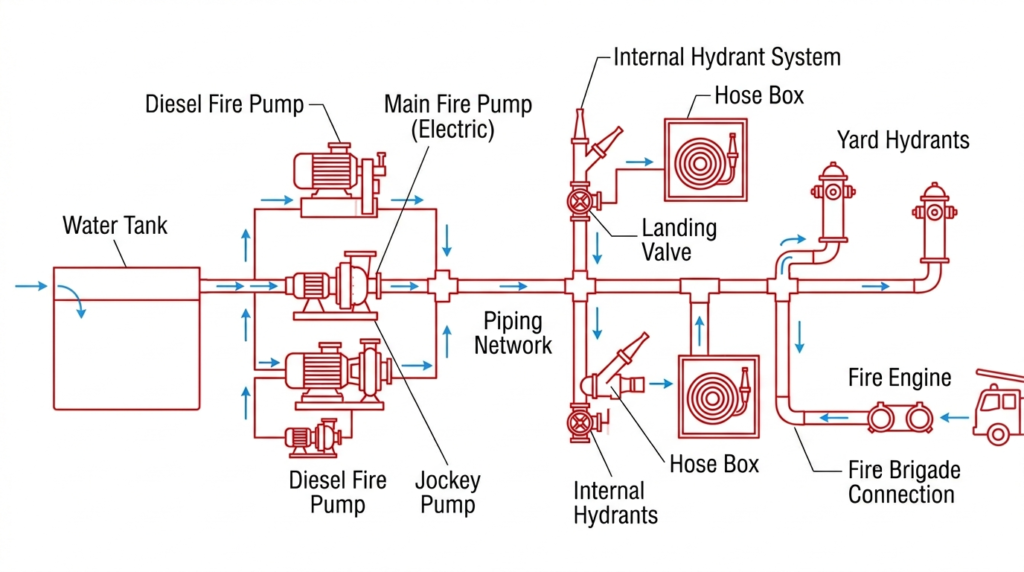
1. Fire Water Storage Tank
The fire water storage tank is the primary source of water in a hydrant system. It ensures that sufficient water is available during fire emergencies.
Key Functions:
- Stores dedicated water for firefighting
- Maintains reserve capacity
- Supports continuous operation
Types:
- Underground tanks
- Overhead tanks
- Terrace tanks
Proper tank sizing is essential to meet fire safety standards and ensure uninterrupted supply.
2. Fire Pump Set
The fire pump system is responsible for delivering water at the required pressure throughout the building.
Main Components:
Main Fire Pump
- Electrically operated
- Supplies high-pressure water
Diesel Pump
- Backup during power failure
Jockey Pump
- Maintains system pressure
- Prevents unnecessary pump operation
A well-designed pump system ensures effective firefighting across all areas.
3. Hydrant Piping Network
The piping network distributes water from the storage tank to various hydrant points.
Types of System:
- Loop system (more reliable)
- Branch system (simpler design)
Materials Used:
- Mild Steel (MS)
- Galvanized Iron (GI)
Proper pipe sizing and layout design are critical for maintaining pressure and flow.
4. Hydrant Valves (Internal & External)
Hydrant valves are the points where water is accessed during firefighting.
Types:
Internal Hydrants
- Located inside buildings
- Used by trained personnel
Yard Hydrants
- Installed outside
- Used by fire brigade
These valves provide quick and controlled water discharge during emergencies.
5. Hose Box & Accessories
The hose box contains all necessary firefighting tools.
Includes:
- Fire hose
- Branch pipe / nozzle
- Hose reel
- Couplings
These accessories help direct water precisely to the fire source.
6. Landing Valves
Landing valves are installed in multi-story buildings.
Functions:
- Provide water outlets at each floor
- Connected to vertical risers
They ensure easy access for firefighting teams in high-rise structures.
7. Fire Brigade Connection (FBC)
The Fire Brigade Connection allows external water supply into the system.
Key Benefits:
- Supports system during large fires
- Boosts water pressure
This is especially important when the internal water supply is insufficient.
8. Valves & Fittings
These components regulate and control water flow within the system.
Types Includes
- Gate valves
- Non-return valves (NRV)
- Air valves
- Drain valves
They ensure smooth operation and easy maintenance of the hydrant system.
Importance of Fire Hydrant System Components
Each component contributes to the overall effectiveness of the system.
Benefits
- Quick fire response
- Reliable water supply
- Compliance with NBC/NFPA standards
- Protection of life and property
For complete protection, proper design and installation are essential. You can explore fire hydrant system installation services for professional support.
Common Mistakes in Hydrant System Design
Avoid these common issues:
- Incorrect pipe sizing
- Low pump capacity
- Poor hydrant placement
- Lack of maintenance
These mistakes can reduce system efficiency during emergencies.
FAQs on Fire Hydrant System Components
1. What are the main components of a fire hydrant system?
They include tank, pumps, piping, valves, hose box, landing valves, and fire brigade connection.
2. What is the role of a jockey pump?
It maintains pressure in the system and avoids unnecessary operation of the main pump.
3. What is the difference between hydrant and sprinkler systems?
Hydrant systems are manually operated, while sprinkler systems activate automatically.
4. Why is fire brigade connection important?
It allows external water supply during large fire emergencies.
5. Is a fire hydrant system mandatory in India?
Yes, as per NBC guidelines, it is required for many commercial and high-rise buildings.
The components of a fire hydrant system work together to ensure efficient firefighting during emergencies. From water storage and pumps to valves and accessories, each part plays a critical role in delivering water quickly and effectively.
A properly designed system not only ensures safety but also helps in meeting regulatory compliance.